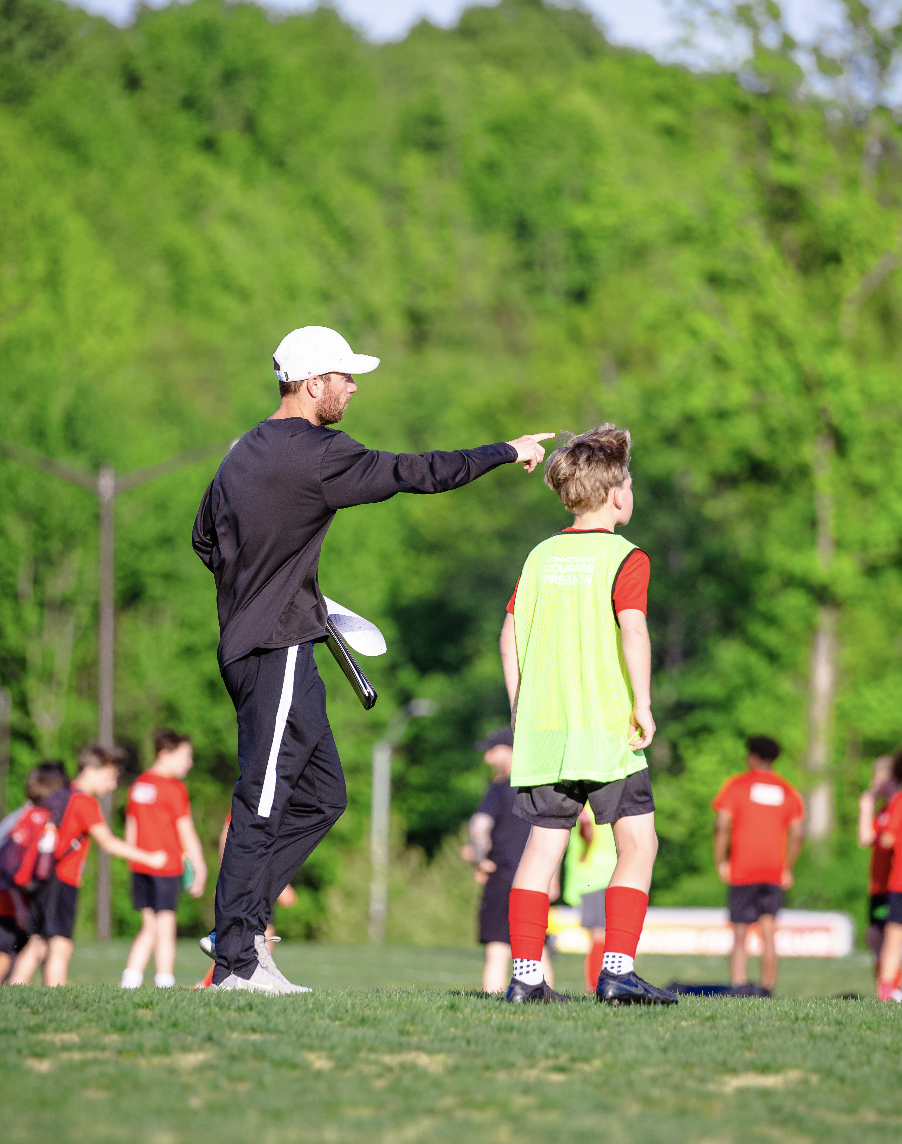
Think about the last time you approached your coach to ask a question about your development. Not because they pulled you aside or gave you feedback, but because you took the initiative to start a conversation. When was it?
Many young players want to improve, but they hesitate to approach their coaches. Maybe they're nervous, don't know what to ask, or lack the confidence to start a conversation. Instead, they wait for their coach to tell them what they need to work on.
But becoming a better player requires more than simply showing up to training, listening to instructions, and completing exercises. It requires curiosity, initiative, and a willingness to take responsibility for your own development.
Stop Waiting for Your Coach to Come to You
Your coaches play an important role in your development. They provide instruction, feedback, and guidance to help you become a better player. But your development isn't solely their responsibility. The players who improve the most are often the ones who are eager to learn. They want to understand why they're being asked to do something, what they could have done differently, and how they can continue improving. Instead of waiting for feedback, they actively seek it.
Think about how much you could learn by having more conversations with your coaches. Maybe there's a tactical decision you don't understand, an area of your game you're struggling with, or something you've noticed during a game that you'd like clarification on.
Rather than keeping those questions to yourself, ask them. You don't need to have all the answers. But you should be willing to seek them out.
Learn How to Ask Better Questions
There's a difference between asking a question and asking a question that leads to meaningful feedback.
For example, asking your coach, "How am I doing?" might lead to a general response. But asking about a specific situation or area of your game gives your coach an opportunity to provide more detailed guidance.
Here are three questions we encourage players to ask their coaches:
"What is one area of my game I should prioritize improving?" This helps you identify a specific development priority rather than trying to improve everything at once.
"What could I have done differently in that situation?" Bring up a moment from training or a game that you didn't fully understand. Ask your coach to explain what they saw and what other options you had.
"What should I be paying attention to when I'm watching the game from the bench?" Even when you're not playing, there are opportunities to learn. Your coach can help you understand what to look for and how to better recognize situations within the game.
The more specific and intentional your questions are, the more valuable the conversations can become.
Get Comfortable Being Uncomfortable
We understand that approaching your coach can feel intimidating, especially if you're not used to having those conversations. You might worry about asking the wrong question, bothering your coach, or not knowing what to say. But here's something important to understand: the more you practice having these conversations, the more comfortable they'll become.
Start small. Approach your coach after training and ask one question. If you have something more detailed to discuss, ask if there's a good time to meet. Then do it again.
Just like developing a technical skill, becoming comfortable communicating with your coaches takes repetition. You won't necessarily feel confident the first time, and that's okay. Don't wait until you feel completely comfortable to start. The confidence will develop as you continue putting yourself in those situations.
Be Willing to Hear Something You Don't Expect
Asking questions is only valuable if you're willing to listen to the answers.
Sometimes your coach might give you feedback you weren't expecting. They might point out an area of your game that you thought was a strength or explain a situation differently than you experienced it. It's natural to have your own perspective, but that doesn't mean you should immediately dismiss theirs.
Instead, approach the conversation with an open mind. Try to understand what they're seeing and why they're giving you that feedback. If something doesn't make sense, ask another question. Then give their advice a genuine chance.
Apply it during training, see how it affects your performance, and continue the conversation as you learn. Being coachable isn't just about listening when someone gives you feedback. It's about actively seeking it, understanding it, and applying it.
Take Responsibility for Your Learning
The players who improve the most aren't always the ones who know the most about soccer. They're the ones who recognize there's always more to learn. They ask questions, seek feedback, and take an active role in understanding their game.
And those conversations shouldn't stop after one question. As you apply what you've learned, new situations and challenges will arise. Continue communicating with your coaches and finding ways to improve.
So here's our challenge for you this week: Approach your coach and ask one thoughtful question about your development.
It doesn't have to be a long conversation. Just take the initiative, be curious, and listen with an open mind. The more responsibility you take for your learning, the better equipped you'll be to make decisions, recognize opportunities for improvement, and continue growing as a player.
Become a More Intentional Player
At Gabarra Elite Development, we believe players should take an active role in their own development. Through individualized training plans, weekly mentorship, and structured off-field work, we help players build the confidence, accountability, and understanding needed to pursue their long-term goals.
If you're serious about playing college soccer and want guidance in becoming a more intentional, independent player, apply to work with us inside Gabarra Elite Development.
