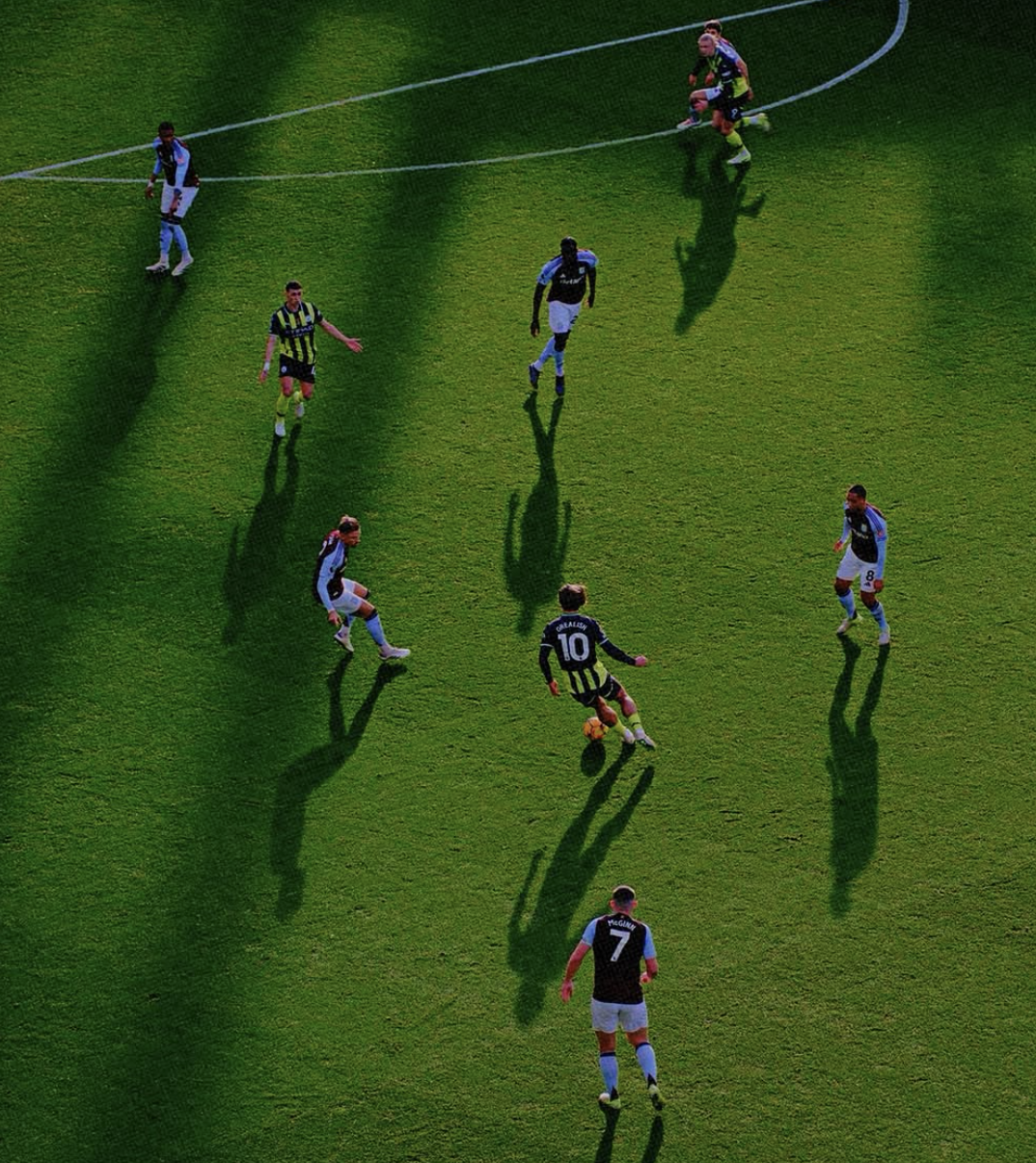
Watching professional soccer can be one of the best development tools available to a young player, but only if you know what to look for. It’s easy to follow the ball, wait for goals, and pay attention when someone beats a defender in a flashy way. Those moments are exciting, but they only show a small part of what makes a player successful.
Professional players are giving you a free masterclass every single weekend. The question is whether you’re paying attention to the details that actually make them great. Their movement, scanning, body positioning, reactions in transition, work rate, communication, and decision-making can teach you far more than a highlight clip ever will.
Start by Choosing One Player
Choose one player who plays your position and commit to watching them closely for at least 45 minutes. Watching the full 90 is even better, but one half is enough to start noticing patterns. The goal is to follow that player instead of automatically following the ball around the field.
At first, this might feel difficult. The broadcast naturally pulls your eyes toward the action, but so much of the game is happening away from the ball. Once you start focusing on one player, you’ll notice how often they are adjusting their position, checking their shoulders, communicating, creating space, and preparing for something before it happens.
Study What They Do Without the Ball
Most players are only directly involved with the ball for a small portion of the game, which means their value is often shown through what they do without it. Watch how your player moves to create an option for a teammate. Notice how often they scan before the ball arrives and how they position their body so they can see more of the field.
Pay close attention during transition moments. What do they do as soon as their team loses possession? Do they sprint back, apply immediate pressure, communicate, or adjust their position to protect space? Professional players are constantly locked in. There are very few moments when they completely check out of the game.
Also watch their body language. Notice how they react after making a mistake, losing the ball, or missing an opportunity. Do they stop and show frustration, or do they immediately recover and get involved in the next action? Those reactions reveal a lot about their standards and mentality.
Study Their Decisions With the Ball
When your player receives the ball, focus on the decisions they consistently make. Notice where their first touch takes them, how quickly they play, and whether they use one touch, two touches, or carry the ball forward. Pay attention to when they choose to play forward, when they keep possession, and how they respond when they are under pressure.
You don’t need to understand every tactical reason behind each decision. Start by looking for patterns. Professional players rarely make random choices. Their body position, scanning, and movement before receiving usually prepare them for the decision they make once the ball arrives.
Look for the Small Habits
The qualities that separate high-level players are often found in actions that won’t appear in a highlight reel. Watch who sprints back after losing possession. Watch who stays relentless while pressing. Watch who communicates when the team is under pressure, helps organize teammates, and continues moving even when they know they may not receive the ball.
These habits show commitment to the entire game, not just the moments when a player gets to be the star. That grittiness, leadership, and willingness to do the difficult work are a huge part of performing at a high level.
Use This Game Analysis Roadmap
While watching, write down:
Three things the player does when they don’t have the ball.
Look at their movement, scanning, body positioning, communication, defensive effort, and reactions in transition.
Three decisions they consistently make when they have the ball.
Notice their first touch, number of touches, passing choices, composure, and when they choose to attack or keep possession.
Two things you want to incorporate into your own game.
Choose details that are realistic and specific enough to practice. Instead of writing “move better,” write something like, “scan over both shoulders before receiving,” or, “sprint back immediately after losing the ball.”
Players to Study by Position
If you're not sure where to start, here are a few players we recommend watching. Remember, don't just watch their highlights—study their habits.
Center Backs
Naomi Girma — Watch her positioning, composure, communication, and ability to solve problems before they develop.
Virgil van Dijk — Pay attention to his leadership, body positioning, and how calm he remains when defending under pressure.
Outside Backs
Emily Fox — Study her recovery runs, work rate, and willingness to contribute on both sides of the ball.
Alphonso Davies — Watch his transition moments, recovery speed, attacking instincts, and commitment to getting back and helping his team defensively.
Center Midfielders
Aitana Bonmatí — Pay attention to her scanning, movement into space, body positioning, and decision-making before the ball reaches her.
Rodri — Watch how he controls the tempo, positions himself to receive, and consistently makes simple, effective decisions.
Claire Hutton — Study her composure, defensive awareness, positioning, and ability to connect play through the midfield.
Attacking Central Midfielders
Rose Lavelle — Watch how she finds space between lines, receives on the turn, carries the ball forward, and creates opportunities in crowded areas.
Jude Bellingham — Study his movement into dangerous spaces, physicality, leadership, and commitment in transition moments.
Wingers
Trinity Rodman — Study her relentlessness. Watch her pressing, transition runs, directness, and commitment to both attacking and defending.
Forwards
Sophia Wilson — Watch the timing of her runs, her ability to create separation, and how consistently she finds dangerous spaces.
Harry Kane — Study his movement, link-up play, and understanding of when to drop toward the ball versus when to stretch the field.
You don’t have to copy everything a professional player does. Choose the habits that fit your position, your game, and the areas you’re currently working to improve. The goal is to become a more intentional observer and start recognizing the small details that help players perform consistently at the highest levels.
Watching soccer becomes much more valuable when you stop watching only as a fan and start studying it as a player. Pick one player, follow them closely, take notes, and leave the game with two details you can begin applying to your own development.
Inside Gabarra Elite Development, we can take this process further through more in-depth player analysis and an individualized plan built around what each player should be studying. The goal is to help players understand the game more clearly and turn what they observe into actions they can apply on the field.
