Inside Our Mindset Workshop
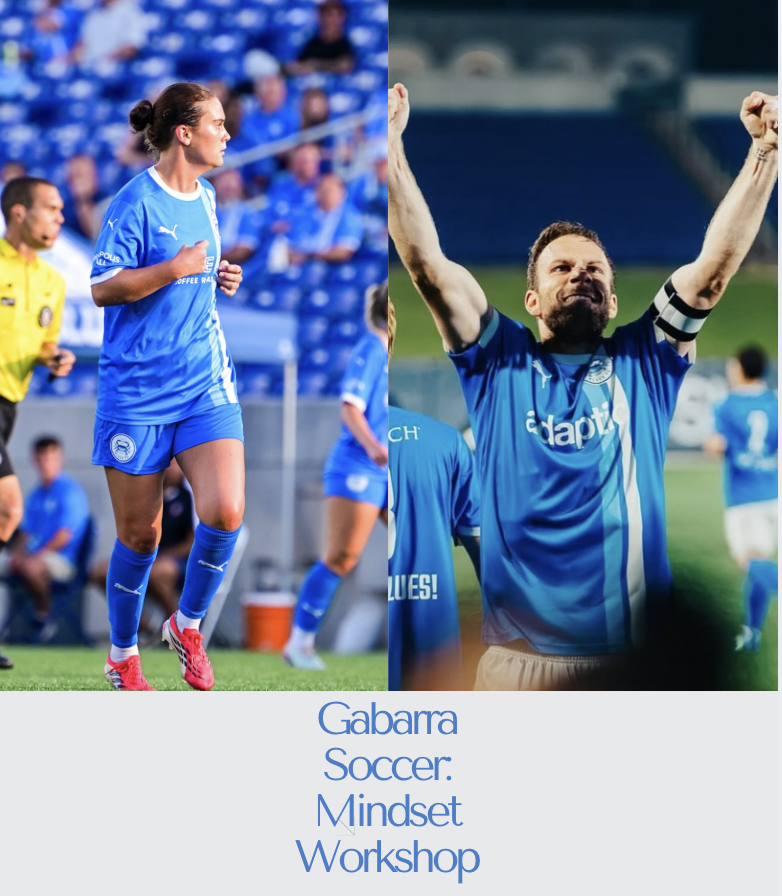
Last Friday, we hosted a Gabarra Soccer Mindset Workshop. We didn't talk about finishing, defending, fitness, or what you should be doing in your extra training. Instead, we spent the night talking about something that affects every single one of those things: the mindset behind becoming a great player.
Tyler and I have both had moments throughout our careers where we questioned ourselves, struggled with confidence, had to learn how to lead, and faced situations that felt completely out of our control. Those experiences don't stop as you reach higher levels. If anything, the challenges just change. That's why we wanted players to understand that becoming a great player isn't only about developing what you can do with a soccer ball. You also have to develop the person who is going to handle everything that comes with chasing big goals.
Throughout the workshop, we focused on three areas: confidence, leadership, and adversity. These are all things players tend to think they either naturally have or don't have. But confidence can be built. Leadership is a choice. And your response to adversity can be trained. None of those things happen overnight, but every single one can be worked on starting today.
Confidence Isn't Something You Find
Every player struggles with confidence. Youth players do. College players do. Professional players do. Confidence comes and goes, and having moments where you don't feel confident doesn't mean there is something wrong with you as a player. The important thing to understand is that confidence isn't a personality trait. It's something you build.
There are also things that consistently steal it. Comparing yourself to teammates, being afraid to make mistakes, obsessing over playing time, perfectionism, social media, and allowing one bad game to turn into multiple negative thoughts about yourself can all chip away at how you see yourself. Those thoughts build momentum if you don't recognize them. One mistake can turn into I'm playing badly, and that can quickly become I'm not good enough. Suddenly, you're playing scared and safe instead of being present and trusting yourself.
Building confidence works the same way, just in the opposite direction. Positive self-talk matters. Being present matters. Experience matters. But some of the strongest confidence comes from doing hard things repeatedly and keeping promises to yourself. When you say you're going to do your extra work and then do it, you're building trust in yourself. When something is difficult and you keep going, you're proving to yourself that you're capable. When you've put yourself in an uncomfortable situation over and over again, eventually you can tell yourself, I've been here before. I can handle this.
So if you're struggling with confidence right now, don't wait around hoping you'll suddenly feel different before your next game. Ask yourself: What am I doing every day that is building my confidence?
You Don't Need a Captain's Armband to Lead
We also spent a lot of time talking about leadership because young players sometimes have a very narrow idea of what a leader looks like. They picture the loudest player on the field or the person wearing the captain's armband. But leadership isn't a title. It's a choice, and every player on a team has the opportunity to make that choice.
Leadership is in the small things. Are you reliable? Do you do what you say you're going to do? When something goes wrong, do you immediately look for someone else to blame, or do you look at yourself first? Do you encourage a teammate after she makes a mistake? Do you check in on people? Are you willing to pick up the cones after training without someone asking? Can you have a hard conversation when it needs to happen? Those things may not feel significant in the moment, but that's what leadership actually looks like day after day.
One of my favorite things we talked about was the responsibility leaders have for the environment around them. Great leaders make people feel seen. They create an environment where teammates feel safe to be themselves, ask questions, push themselves, make mistakes, and even fail. Ultimately, leaders make the people around them better.
You don't have to wait until you're older. You don't have to be the best player. And you definitely don't have to wait for someone to name you captain. You can decide what kind of teammate and leader you're going to be at your very next training session.
You Will Face Adversity
This was probably the most important truth we talked about all night: every player faces adversity. It doesn't matter how talented you are or how hard you work. You could get injured, lose your starting position, get cut from a team, have a coach who doesn't believe in you, or go through a stretch where you aren't playing well. Tyler and I have both experienced adversity at different points in our careers. I talked during the workshop about tearing my ACL at the peak of my college career and getting released from the Orlando Pride after preseason in 2024.
When something like that happens, it's incredibly easy to fall into a victim mentality. Why is this happening to me? Why does everyone else have it easier? What's the point? Maybe I'm not good enough? A victim mentality keeps your attention on the circumstances and everything that feels unfair or outside of your control.
But you can choose a different response. A growth mentality asks completely different questions: How can I learn from this? How can this make me better? Who do I need to become because of this? What is this trying to teach me? The situation itself may not change, but your relationship with it does. Instead of asking why something is happening to you, you start looking for what you can take from it.
That doesn't mean adversity suddenly becomes easy. It means you stop wasting the experience. Some things are incredibly difficult to develop when everything is going your way. Resilience, gratitude, perspective, patience, character, and leadership are often built during the parts of your journey you would never have chosen for yourself.
So instead of only asking, How do I get through this? ask yourself something harder: What is this teaching me?
The Player You Want to Become
At the end of the workshop, we asked everyone to reflect on a few questions: What is currently holding me back from becoming the player I know I can be? What can I commit to doing consistently over the next 30 days? What type of player do I want to become?
Those questions matter because growth doesn't happen by accident. You have to be willing to look at where you are, where you want to go, and who you need to become to get there. Reflection creates clarity, and clarity gives you the ability to take intentional action.
Every player has big goals. But reaching them requires becoming the person capable of accomplishing them. Confidence, leadership, and resilience aren't things you're going to magically wake up with one morning. They're being built right now through the way you speak to yourself, the way you treat your teammates, the work you do when nobody is watching, and the way you respond when soccer doesn't go your way.
The player you want to become isn't built overnight. It's built one training session, one decision, and one response at a time.
Want More Support With Your Development?
The mental side of the game is something we work on consistently with our players inside Gabarra Elite Development. Through weekly mentorship, personalized training plans, and ongoing support, we help players navigate the challenges that come with pursuing big goals—whether that’s confidence, adversity, recruiting, training, leadership, or simply figuring out what they need to do next.
You don’t have to figure out every part of your development on your own. If you’re serious about playing college soccer and want a plan, accountability, and mentors in your corner throughout the process, apply to work with us inside Gabarra Elite Development.
